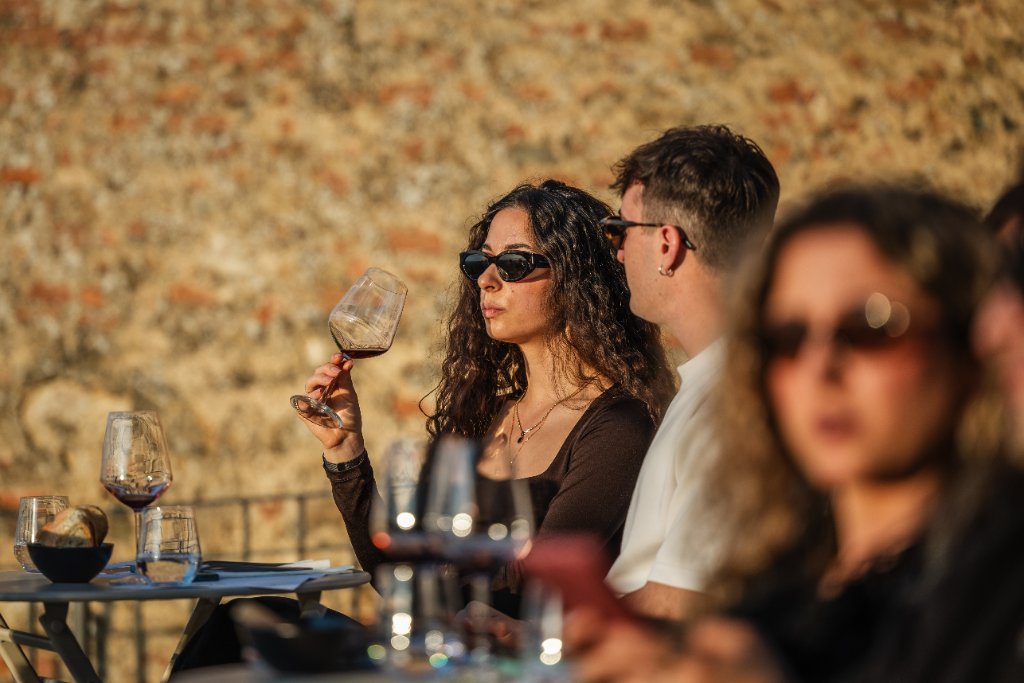
How to Taste Wine Like an Italian: A Beginner's Guide
The sommelier's method explained in simple terms — how Italians approach wine, what they look for, and how you can taste more in every glass
The Italian approach to wine is fundamentally different from the Anglo-Saxon one. In Italy, wine is not primarily a subject for analysis or competition. It is food — something that completes a meal, belongs to a territory and tells a story. The Italian art of tasting wine is the art of listening to that story.
Here is how to do it.
Step 1: The Context First
Before you taste anything, consider where the wine comes from and what it's meant to accompany. An Italian sommelier always thinks about food first. Vino Nobile di Montepulciano was made to be drunk with Chianina beef and aged Pecorino di Pienza. Understanding this context changes what you look for in the glass.
Ask: What does this wine want to be eaten with?
Step 2: Visual Analysis
Hold the glass at an angle against a white background (a napkin or white tablecloth). Observe:
Colour depth: a deep, opaque ruby signals a powerful, tannic wine. A pale garnet suggests elegance and delicacy. Violet/purple tints indicate youth; orange/amber tints indicate age.
Transparency: clarity is a positive indicator. Some unfiltered natural wines are intentionally cloudy — this is different from a fault (visible particles, dull haze).
Viscosity: swirl the glass and observe the "tears" or "legs" that run down the inside. Thick, slow-moving tears indicate high alcohol or residual sugar. Fast, thin tears suggest a lighter wine.
Step 3: Olfaction — The Italian Way
The Italian approach to smelling wine has two phases:
First nose: smell the wine without swirling. This reveals the most volatile aromas — often the most delicate and interesting.
Second nose: swirl gently (three slow rotations) and smell again. The swirling introduces oxygen and releases the heavier aromatic compounds.
What to look for:
- Primary aromas (from the grape): fruit, flowers, herbs. In Vino Nobile: cherry, violet, iris.
- Secondary aromas (from fermentation): fresh bread, yogurt, cream.
- Tertiary aromas (from ageing): leather, tobacco, dried fruit, truffle, spice.
The Italian way: don't search for specific words. Simply notice what the wine reminds you of. A good sommelier will tell you that the best description of a great Vino Nobile is "grandmother's kitchen in autumn" — not a list of seventeen fruit notes.
Step 4: Taste
Take a small sip — enough to coat the entire mouth. Then:
- Let it spread: distribute the wine across all areas of the palate before swallowing.
- Note the sweetness (tip of tongue), acidity (sides), tannins (drying sensation on gums), and alcohol (warmth in the throat).
- After swallowing, count the finish: how long do the flavours persist? A great wine: 20–30 seconds. An extraordinary wine: much longer.
The Italian measure of a great wine is the persistenza — the persistence of the finish. More than any other criterion, this is what distinguishes a truly great bottle.
Step 5: The Integration
Great wine has no single element that dominates. The acidity, tannins, fruit, alcohol and minerality are all present — but none of them shouts. They are integrated, forming a whole that is greater than the parts.
When an Italian sommelier says "è un vino equilibrato" (it's a balanced wine), they mean this: everything is present, everything is in harmony.
The Best Way to Learn
Nothing replaces guided tasting with a sommelier who can show you, in real time, what they're pointing at in the glass. Our Sunset Wine Tasting at Eramo is led by an AIS-certified sommelier and designed specifically for guests who want to understand Vino Nobile di Montepulciano — at any level of wine knowledge.
Experience It in Person
Private sunset wine tasting, AIS-certified sommelier, exclusive hilltop garden in Montepulciano. Maximum 18 guests.