Italian Wine Regions: The Complete Guide for Enthusiasts
From Piedmont to Sicily, from Barolo to Primitivo — how to navigate Italy's extraordinary wine diversity
Italy has more wine grape varieties than any other country in the world — over 350 authorized and identified varieties. Navigating Italian wine is both enormously rewarding and somewhat complex. Here's your essential guide.
The classification system
Italy's wine classification has four levels:
- DOCG (Denominazione di Origine Controllata e Garantita) — the highest, strictest rules, government tasting panel required. About 75 DOCGs.
- DOC (Denominazione di Origine Controllata) — controlled appellation, slightly less strict. About 340 DOCs.
- IGT (Indicazione Geografica Tipica) — a broad geographic indication. Includes the famous "Super Tuscans" (Sassicaia, Ornellaia, Tignanello).
- Vino — table wine, no geographic indication.
The essential regions
Tuscany: Brunello di Montalcino, Vino Nobile di Montepulciano, Chianti Classico, Bolgheri. The most internationally recognized region.
Piedmont: Barolo, Barbaresco, Barbera d'Asti, Moscato d'Asti. Italy's Burgundy — complex, age-worthy, food-driven wines.
Veneto: Amarone della Valpolicella, Soave, Prosecco. Large volumes but with islands of genuine quality.
Campania: Taurasi (Aglianico), Fiano di Avellino, Greco di Tufo. The rediscovery of southern Italian greatness.
Sicily: Etna Rosso and Bianco, Nero d'Avola, Marsala. The most exciting emerging region in Italy today.
Friuli: Collio, Colli Orientali. White wines of extraordinary complexity — some of Italy's very best.
Where to start
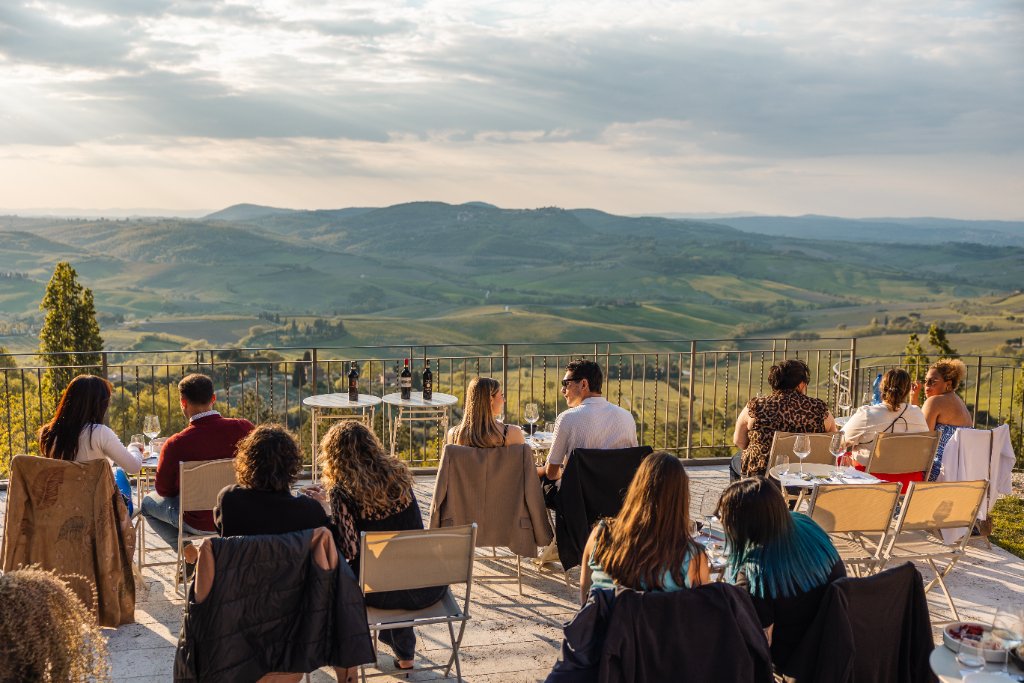
For wine beginners visiting Italy, start with Tuscany — specifically the Montepulciano area. The landscape is extraordinary, the wines are among the world's best, and the food culture is unmatched. A guided private tasting experience is the best way to begin.
Vivi l'esperienza di persona
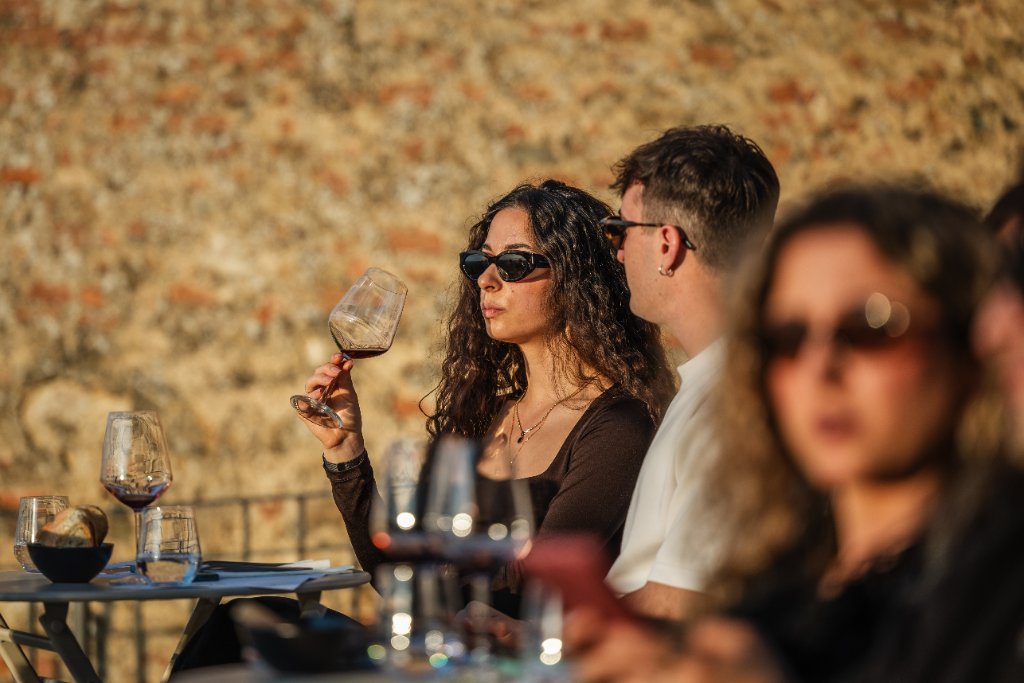
Degustazione privata al tramonto, sommelier certificato, location esclusiva a Montepulciano. Posti limitati a 18 ospiti.