Wine Tasting for Beginners: How to Taste Wine Like a Sommelier
A practical guide to the art of wine tasting — sight, smell, taste and the vocabulary to describe what you experience
Wine tasting is a skill anyone can learn. It doesn't require an innate talent or years of study. It requires attention, practice, and a method. Here's the sommelier's method.
Step 1: Visual analysis
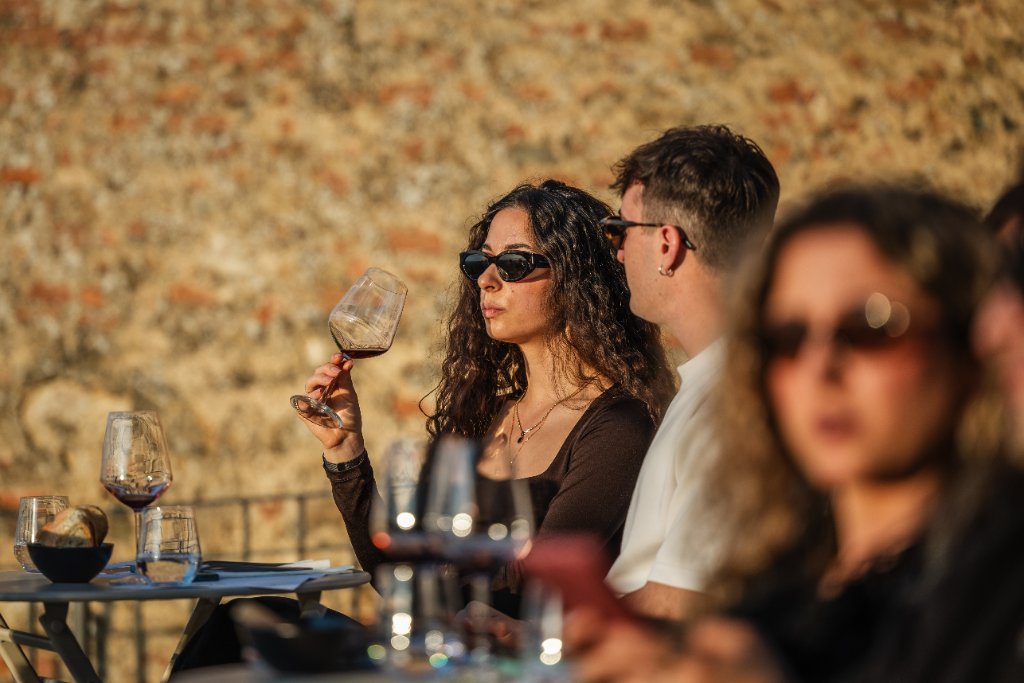
Hold the glass against a white background — a napkin works fine. Observe:
- Color: red wines range from purple/violet (young) to garnet/orange (mature). White wines from pale straw to deep gold.
- Clarity: a well-made wine should be clear, not cloudy (unless intentionally unfiltered).
- Viscosity: swirl the glass and watch the "legs" — the streams of wine that run down the inside. High alcohol/glycerin = more pronounced legs.
Step 2: Olfactory analysis
First, smell the wine without swirling. Then swirl gently and smell again. Look for:
- Primary aromas (from the grape): fruit (cherry, blackberry, citrus), floral (rose, violet), herbal
- Secondary aromas (from fermentation): bread, yogurt, butter
- Tertiary aromas (from aging): vanilla, toast, leather, tobacco, dried fruit
Step 3: Taste analysis
Take a small sip and let it coat all surfaces of your mouth. Assess:
- Sweetness (sensed at the tip of the tongue)
- Acidity (sides of the tongue — makes your mouth water)
- Tannins (drying sensation on the gums — only in red wine)
- Body (weight and viscosity on the palate)
- Finish (how long the flavors persist after swallowing)
The vocabulary
Don't worry about using the "right" words. The goal is to communicate your experience. If you smell cherries — say cherries. If you taste something dry and grippy — say tannins. The more you practice, the more precise your vocabulary becomes.
The best way to learn: guided tastings
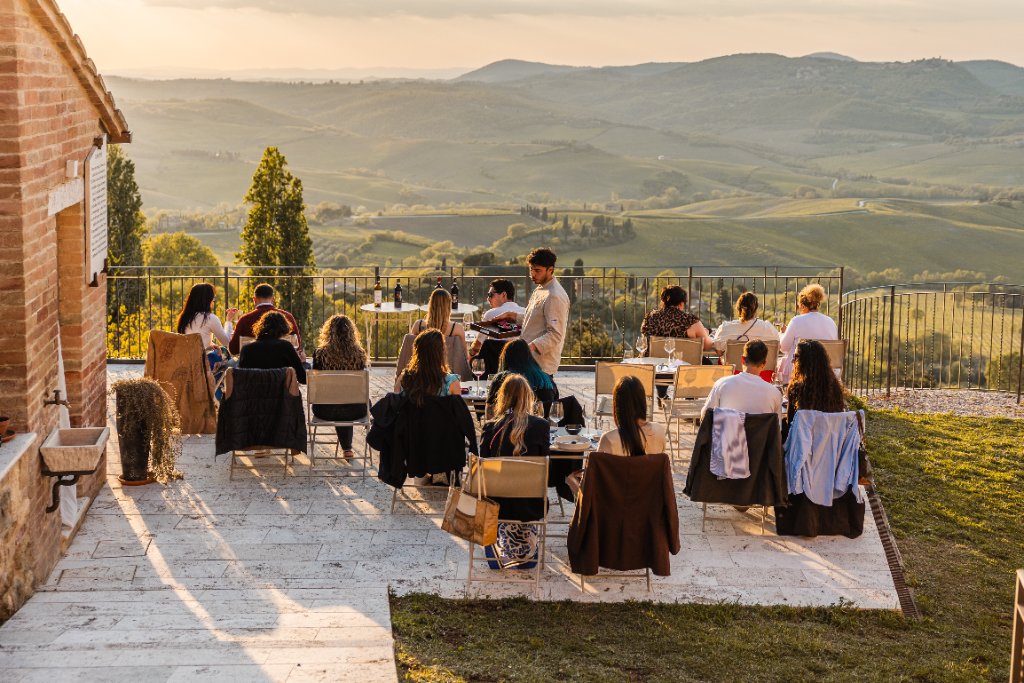
Nothing replaces guided tasting with a sommelier. In a good guided session, the sommelier teaches you to notice what you'd otherwise miss — and explains why you're smelling and tasting what you do.
Vivi l'esperienza di persona
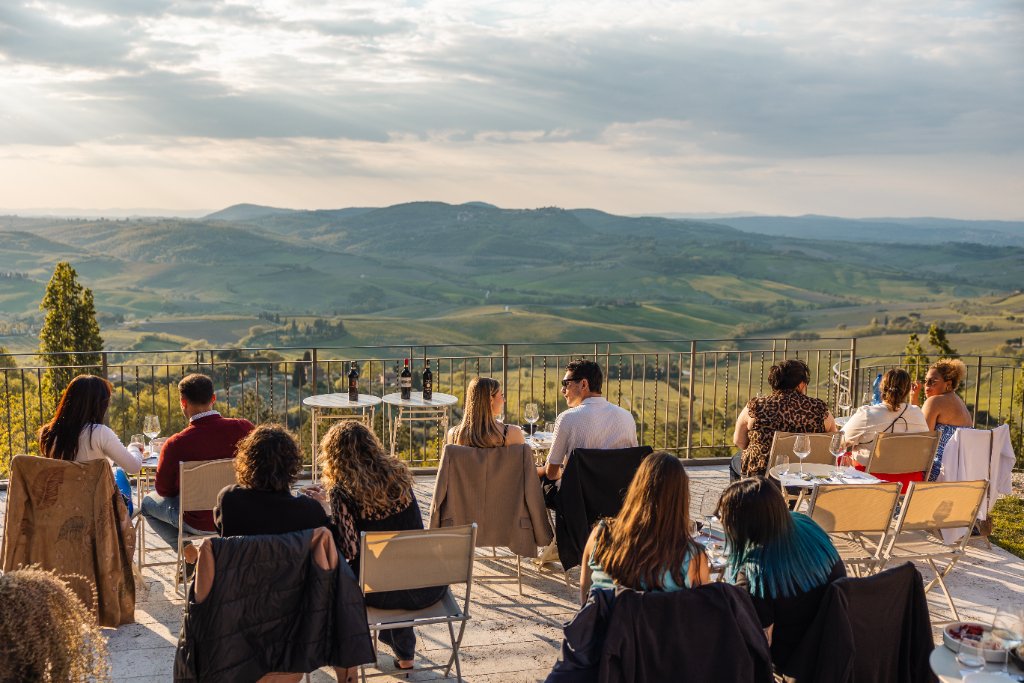
Degustazione privata al tramonto, sommelier certificato, location esclusiva a Montepulciano. Posti limitati a 18 ospiti.