The Complete Guide to Vino Nobile di Montepulciano
History, terroir, producers, best vintages and how to taste Italy's most underrated DOCG — everything a wine lover needs to know
Vino Nobile di Montepulciano is, by almost any measure, one of the greatest red wines in Italy. It has 700 years of documented history, its own unique grape variety found nowhere else in the world, and the oldest DOCG classification of any Italian red wine. And yet it remains, to many international wine lovers, an underexplored treasure. This is the complete guide.
The History
The wines of Montepulciano appear in written records as early as the 14th century, when the town was a significant trading hub between Siena, Florence and Rome. The Florentine wine merchant Bindo Simone Peruzzi documented shipments of Montepulciano wine to Florence in 1350. In 1511, the humanist Sante Lancerio described the wines as "nobile e gentile" — noble and gentle — in correspondence with Pope Paul III.
The poet Francesco Redi immortalised it in 1685 in Bacco in Toscana, his celebrated praise of Italian wines, where he called the wine of Montepulciano "d'ogni vino il re" — the king of all wines.
In the modern era, Vino Nobile received DOC status in 1966 and — crucially — was the first Italian red wine to receive DOCG status in 1980, two years before Brunello di Montalcino achieved the same classification.
The Grape: Prugnolo Gentile
The defining characteristic of Vino Nobile is its grape. Prugnolo Gentile is a clone of Sangiovese that has adapted over centuries to the specific microclimate and soils of the Montepulciano hills. It is found nowhere else in the world in any significant quantity.
Compared to other Sangiovese expressions, Prugnolo Gentile produces:
- Smaller grape clusters with thinner skins
- More delicate, floral aromas (violet, iris, rose)
- Softer, more elegant tannins in the early years
- Outstanding balance between fruit and acidity at full maturity
The DOCG regulations require a minimum of 70% Prugnolo Gentile in the blend, with the remainder typically composed of local varieties such as Canaiolo and Mammolo.
The Terroir
Montepulciano sits at 600 metres above sea level in the Valdichiana, between the Val d'Orcia to the south and the Chianti hills to the north. The soils are predominantly galestro (flinty schist) and clay, with calcareous subsoils in the best vineyard sites. The altitude brings significant day-night temperature variation, preserving the natural acidity in the grapes even in warm vintages.
The microclimate is cooler and more ventilated than Montalcino (which sits at lower altitude and benefits from warmer temperatures). The result is wines with more delicacy and floral character, traded against some of the power that Brunello achieves.
The DOCG Regulations
The production rules for Vino Nobile di Montepulciano are among the strictest in Italy:
- Minimum 70% Prugnolo Gentile
- Ageing: minimum 24 months (12 of which in oak) for the base wine
- Ageing: minimum 36 months (18 in oak) for Riserva
- Maximum yield: 80 quintals per hectare
- Minimum alcohol: 12.5%
The Best Producers
Avignonesi — The most internationally recognised and innovative estate in the denomination. Biodynamic certification, extraordinary winery architecture at Valiano and a Vin Santo di Montepulciano considered by many the greatest in Italy. Their Grandi Annate is one of the appellation's reference wines.
Boscarelli — Widely considered to produce the most "Burgundian" Vino Nobile, with extraordinary elegance and ageing potential. Their Nocio dei Boscarelli selection is a benchmark. A family estate of the highest integrity.
Poliziano — The most visited producer in the denomination, with a well-constructed range from the accessible Rosso to the exceptional Asinone Vino Nobile. Federico Carletti brought the estate to international prominence.
Salcheto — The most sustainable winery in Montepulciano, with carbon-neutral certification and zero-pesticide viticulture. Their Vino Nobile is excellent and the estate is a model for responsible winemaking.
Dei — A smaller estate with a contemporary approach, producing wines of striking clarity and freshness.
The Best Recent Vintages
- 2016 — Widely considered the greatest vintage of the last decade. Exceptional balance between fruit, structure and acidity. These wines will age for 20+ years.
- 2015 — Warm vintage producing rich, generous wines. Excellent drinking now.
- 2019 — Elegant, fresh, with the kind of acidity that ensures longevity. Particularly impressive Riserva wines.
- 2021 — Very promising — early tastings suggest a refined, complex vintage.
How to Taste Vino Nobile
A proper tasting requires:
- Serving at 16–18°C
- A wide Burgundy glass (the broad bowl opens the floral aromas)
- At least 30 minutes decanting for any wine under 8 years old
- The classic food pairing: Chianina bistecca, wild boar ragù, aged Pecorino di Pienza
Where to Taste It
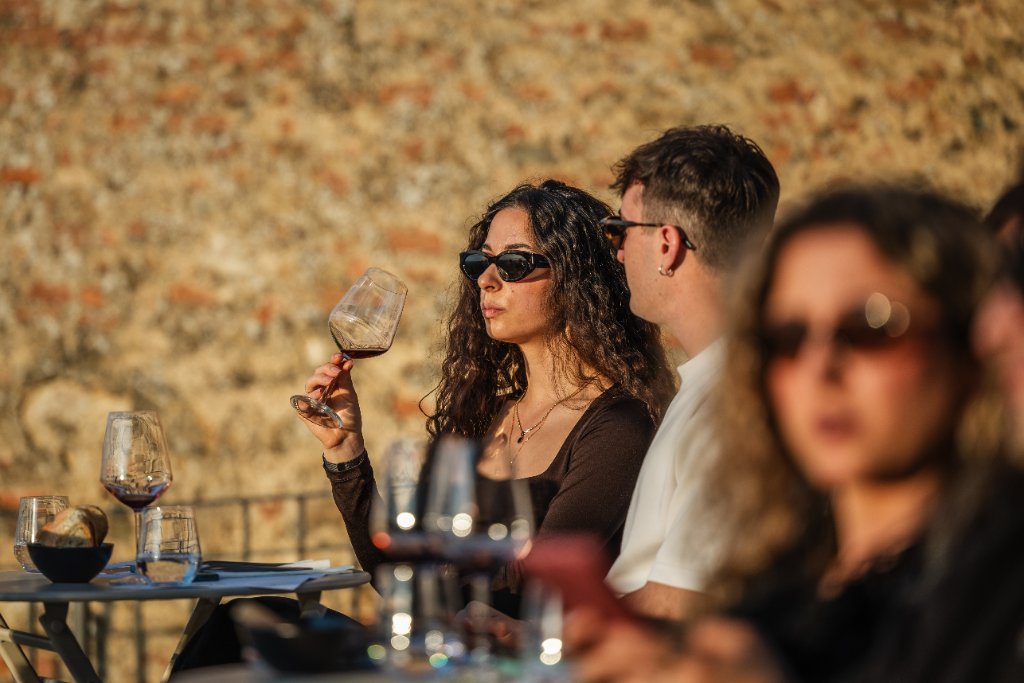
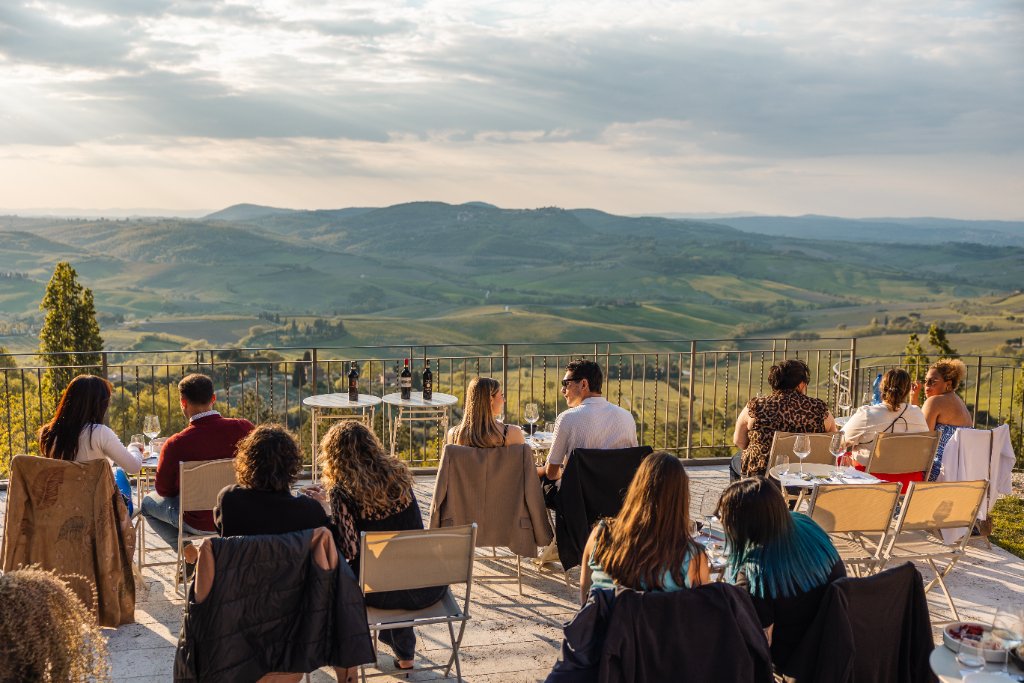
For a genuinely exceptional tasting experience — not a cantina queue but a private guided session with a certified sommelier on a panoramic terrace — our Sunset Wine Tasting at Eramo Secret Garden is the finest option in Montepulciano. Maximum 18 guests, AIS-certified sommelier, chef-prepared pairings. Book your experience here.
Experience It in Person
Private sunset wine tasting, AIS-certified sommelier, exclusive hilltop garden in Montepulciano. Maximum 18 guests.