Montepulciano vs Montalcino: Which Tuscan Wine Town Should You Visit?
Comparing two of Tuscany's great wine towns — art, food, wine, accommodation and the experience each offers visitors
Montepulciano and Montalcino are two of Tuscany's most celebrated wine towns, both producing world-class DOCG red wines from Sangiovese. Both sit on hilltops with panoramic views. Both attract serious wine lovers and discerning travellers. And yet they are genuinely different in character, atmosphere, price and the experience they offer. Here is the honest comparison.
The Wines
Vino Nobile di Montepulciano (Prugnolo Gentile): elegant, floral, with silkier tannins and more accessible in youth. Best vintages drink beautifully from 5–8 years. Price range: excellent bottles from €20–50.
Brunello di Montalcino (Sangiovese Grosso, called Brunello locally): powerful, tannic, legendary for longevity. Top wines need 10–20 years. Price range: entry-level from €35, top producers from €80–200+.
The verdict: Vino Nobile offers better value and more immediate pleasure. Brunello offers greater power and age-worthiness at higher prices.
The Towns
Montepulciano is substantially larger — a proper medieval town with a genuine year-round population, multiple piazzas, a full range of shops, restaurants and services. Piazza Grande is one of the finest Renaissance spaces in Italy. The town is active and lived-in at all times of year.
Montalcino is smaller, quieter and more dominated by wine tourism. The medieval fortress at the top of town is excellent. The range of restaurants and experiences is narrower. It feels more like a wine destination and less like a functioning Italian town.
The verdict: Montepulciano has more to see and do beyond wine. Montalcino is more purely a wine pilgrimage destination.
The Art and Architecture
Montepulciano wins convincingly. Piazza Grande, the Palazzo Comunale (with climbable tower), the Duomo, the Museo Civico, the Palazzo Nobili-Tarugi and — most importantly — the Church of San Biagio (one of the finest Renaissance buildings in Italy) make Montepulciano the more architecturally rich destination.
Montalcino has the medieval fortress and an excellent civic museum, but its primary draw is the wine rather than the art.
The Crowds
Both towns are popular. But Montalcino's smaller size means that in peak season (July–August) the narrow streets can feel genuinely claustrophobic. Montepulciano, with its longer main corso and multiple routes through town, handles crowds more gracefully.
The Food
Both towns have excellent food — the same Tuscan tradition applies in both cases: pici, Chianina beef, Pecorino di Pienza (between the two towns). Montepulciano has more restaurant options and greater variety.
The Experiences
Montepulciano's greatest advantage for the experiential traveller: the breadth of what's available. Cantina visits, private tastings, cooking classes, sunset experiences, private dinners — the range is broader.
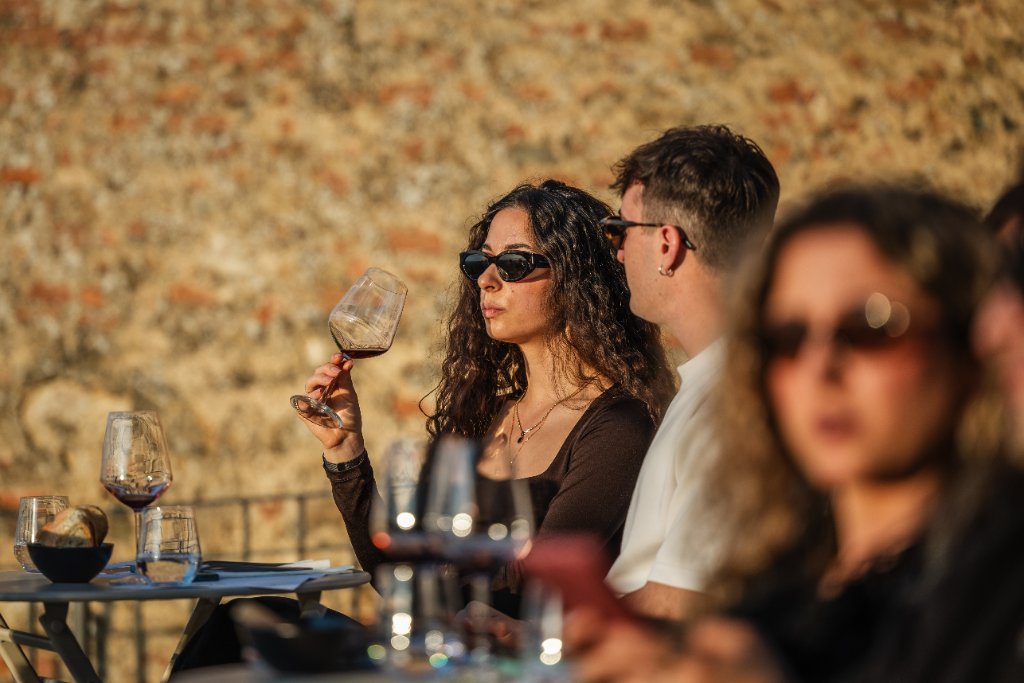
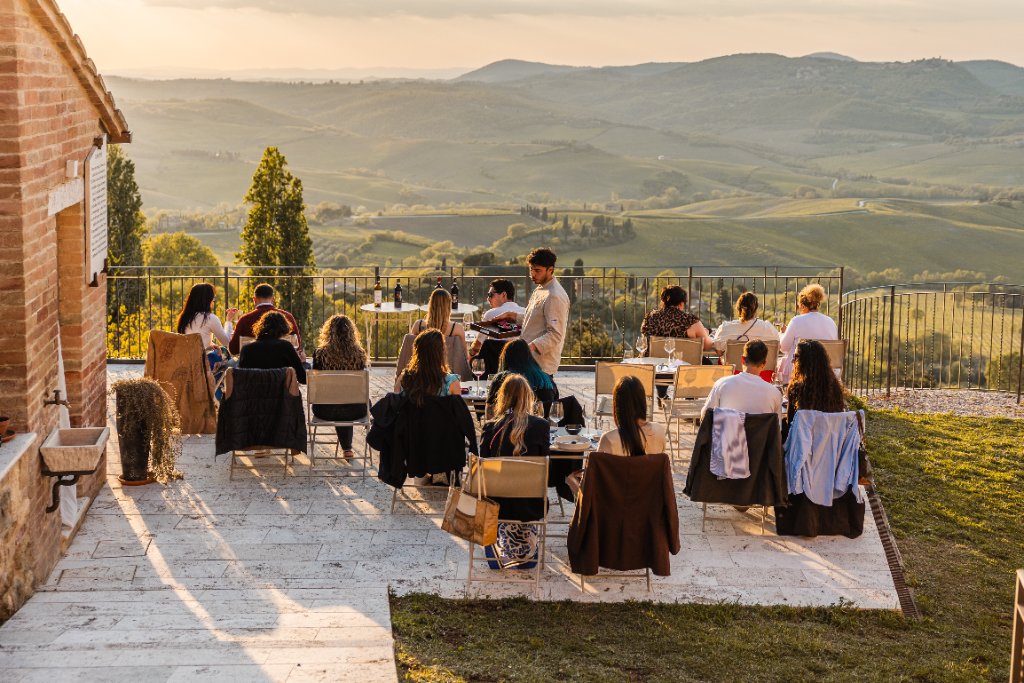
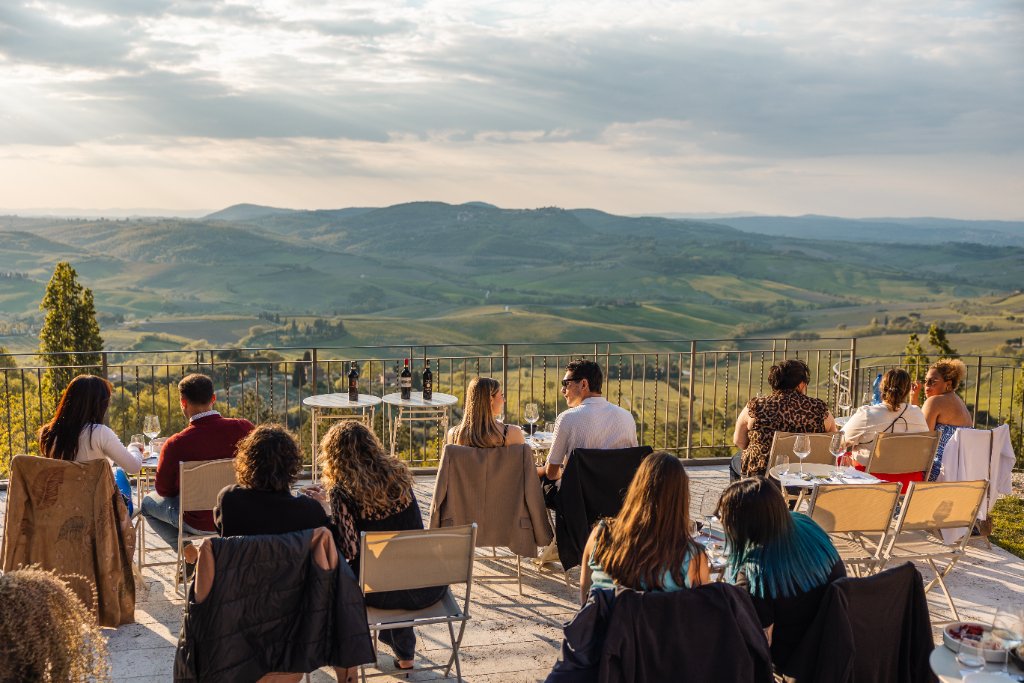
The Eramo Secret Garden experiences in Montepulciano — from the Sunset Wine Tasting to the Chef's Secret Table — represent a category of experience that doesn't have a direct equivalent in Montalcino.
The Verdict
Choose Montepulciano if: you want art, architecture, food and wine together; you prefer a living town to a wine-tourism destination; you value value-for-money in your wine choices; you want a private, exclusive tasting experience.
Choose Montalcino if: Brunello is specifically what you've come to explore; you want the concentrated focus of a dedicated wine pilgrimage; you're happy paying premium prices for the most powerful Sangiovese in Italy.
The ideal: do both. They are 40km apart. Stay in Montepulciano, make the Eramo Sunset Wine Tasting your first evening, and drive to Montalcino for a day trip.
Experience It in Person
Private sunset wine tasting, AIS-certified sommelier, exclusive hilltop garden in Montepulciano. Maximum 18 guests.