Bread, Oil and Wine: The Holy Trinity of Tuscan Food Culture
Why three simple ingredients form the foundation of one of the world's greatest food cultures — and how to experience them at their best
Three ingredients. Seven centuries of culture. Bread, oil and wine are not simply what Tuscans eat and drink — they are what Tuscans are. Understanding them together, in their proper context, changes the way you experience the entire region.
The Bread: Pane Sciocco
Tuscan bread is famously salt-free — pane sciocco, or "unseasoned bread." This is not an oversight or a poverty-born tradition (though it was once connected to medieval salt taxes). It is a deliberate design choice: a neutral base that doesn't compete with the intense flavours of olive oil, wine, cured meats and aged cheese.
When you dip Tuscan bread in olive oil, the oil is the protagonist. When you use it to scoop up a sauce or a ragù, the food is the star. The bread is the canvas, not the painting.
The best Tuscan bread is made with stone-milled flour, natural leavening and a long, slow fermentation. In Montepulciano, several bakeries still follow these traditions.
The Oil: Olio Extravergine Toscano
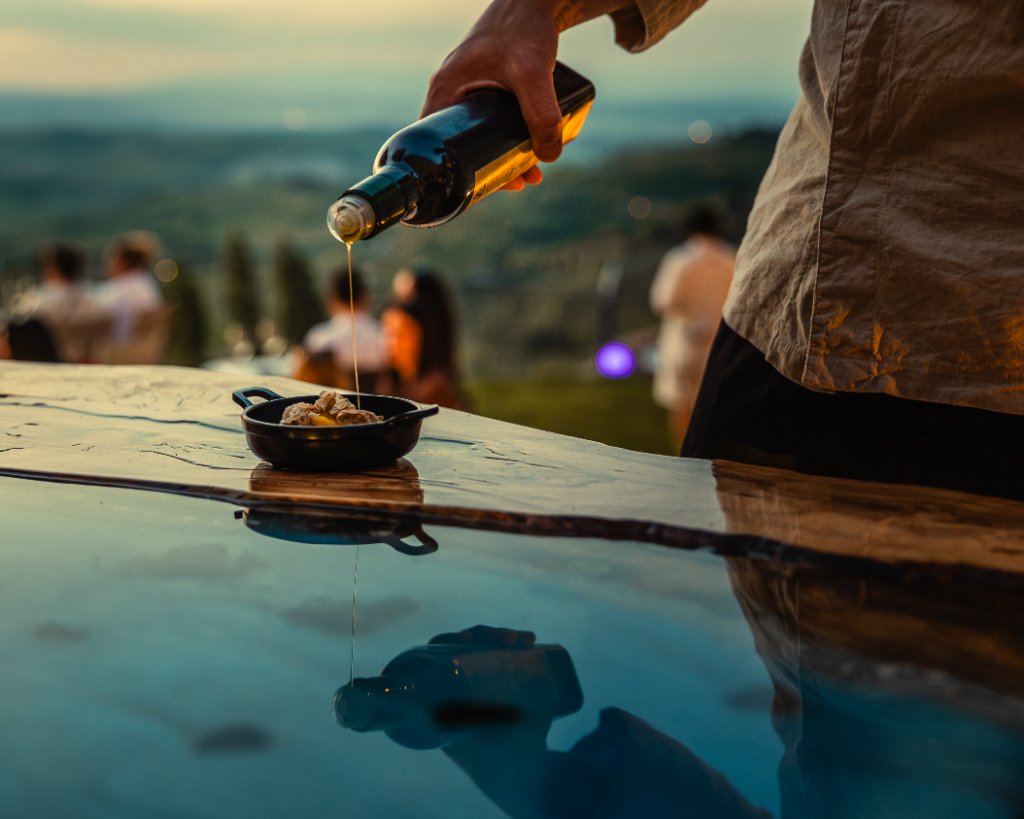
Tuscan extra virgin olive oil is among the most distinctive in the world. Harvested early, cold-pressed within hours, it is intensely green, bitter and pungent — with a characteristic peppery finish in the throat (caused by oleocanthal, a powerful anti-inflammatory compound).
The classic Tuscan use: on bruschetta. A thick slice of bread, toasted over open flame, rubbed with raw garlic, drizzled generously with fresh-pressed oil and finished with a pinch of sea salt. This is fettunta — "oiled slice" — and it is one of the most satisfying foods on earth.
The Wine: Vino Nobile di Montepulciano
And then there is the wine. In Montepulciano, that means Vino Nobile — or its younger sibling, Rosso di Montepulciano. Both are produced from Prugnolo Gentile, the local Sangiovese clone that expresses the particular character of this hillside town: floral, elegant, with firm acidity that cuts through rich food and frames the meal.
The combination of Tuscan bread, Frantoio olive oil and Vino Nobile is not just a starter or a snack. It is a cultural statement about what food should be: simple ingredients, exceptional quality, shared at a table with people you care about.
Experience the Trinity at Eramo
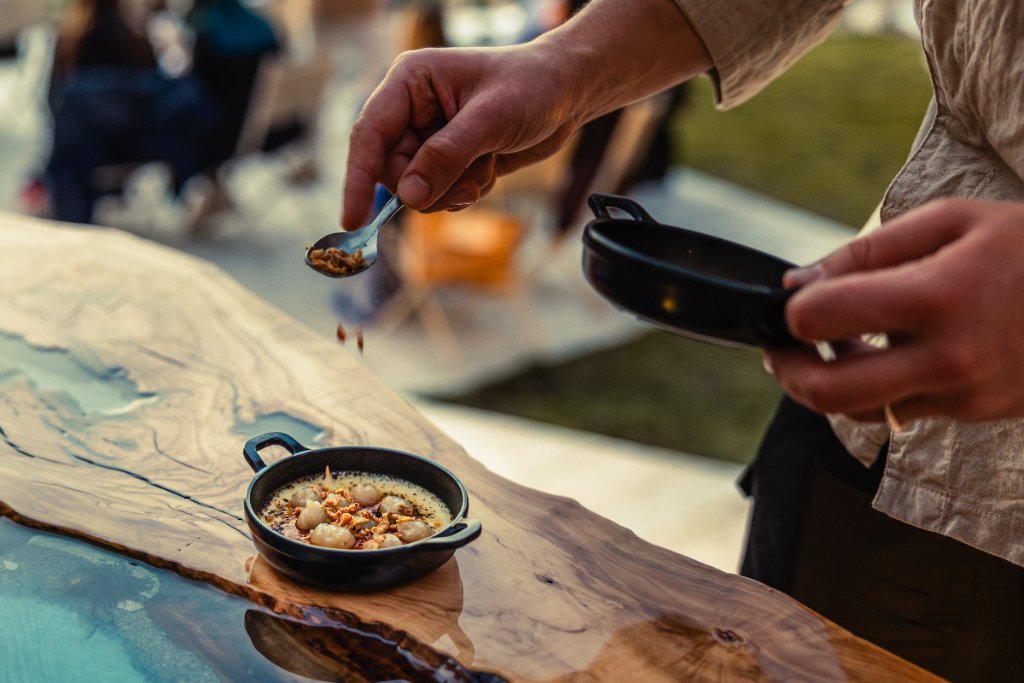
Our Tuscan Roots — Oil & Wine experience is built around exactly this combination: artisan bread baked for the session, four selected Tuscan extra virgin olive oils, and four local wines — including Vino Nobile and Rosso di Montepulciano. A sommelier and oil specialist guide the tasting, narrating the territory through these three fundamental ingredients.
For anyone who wants to understand Tuscany beyond the postcard images, this is where to begin. Discover also our Pasta Fresca & Vino class — the next step in the Tuscan food culture journey.
Experience It in Person
Private sunset wine tasting, AIS-certified sommelier, exclusive hilltop garden in Montepulciano. Maximum 18 guests.